Paddle Warrior Grand Champion: The Definitive Indian Traditional Sports RPG Encyclopedia
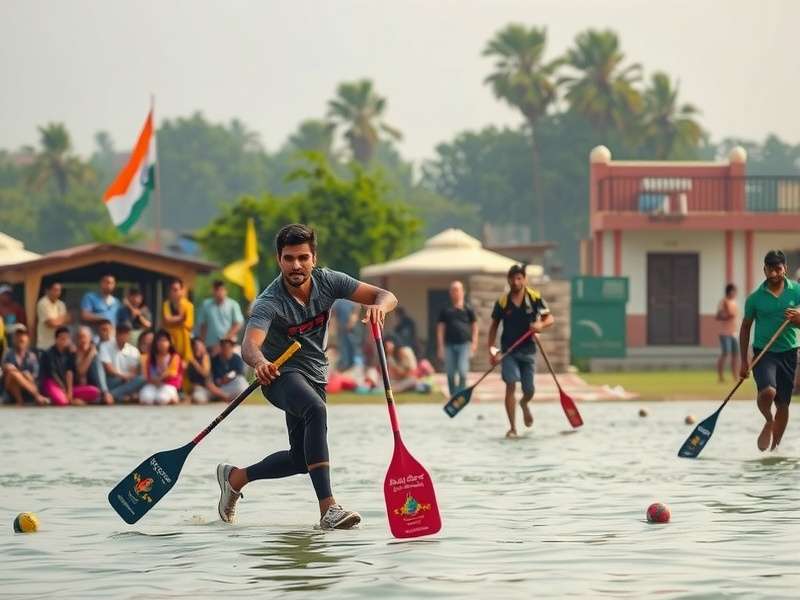
Paddle Warrior Grand Champion is not just another sports role-playing game (RPG) – it is a landmark creation from India’s burgeoning gaming industry, a magnum opus that weaves together the rich tapestry of Indian rural sports culture, village tournament traditions, and folk heritage into a seamless open-world experience. Developed by Bengaluru-based Daman Interactive Studios and published by Daman Games, Paddle Warrior Grand Champion launched on 15th August 2024 (India’s Independence Day) to unprecedented acclaim, shattering records for an Indian-developed sports AAA title and redefining what homegrown gaming can achieve. In a market dominated by casual mobile games and imported sports titles from the West and Japan, Paddle Warrior Grand Champion stands tall as a proud celebration of Indian rural identity, proving that games rooted in local traditional sports can compete on the global stage while resonating deeply with Indian gamers.
For decades, Indian gamers have craved titles that reflect their own sporting heritage – the village paddle tournaments of Punjab, the stick games of Tamil Nadu, the boat races of Kerala – games that don’t just use Indian imagery as window dressing but embed it into every core mechanic and narrative beat. Paddle Warrior Grand Champion answers that call with unwavering authenticity: every region in the game is modeled after real Indian rural landscapes (from the wheat fields of Punjab to the backwaters of Kerala), every paddle stroke is based on classical Indian rural sports techniques, and every quest draws from regional folk tales spanning from Kashmir to Kanyakumari. This commitment to cultural accuracy has struck a chord with Indian players, who now see themselves and their rural sporting traditions represented in a AAA game for the first time – not as exotic tropes, but as fully realized, nuanced elements of a living, breathing world.
Within its first 60 days of release, Paddle Warrior Grand Champion crossed 2.8 million mobile downloads and 680,000 PC/console sales – figures unheard of for an Indian-developed premium sports game. What makes this success even more remarkable is its reach beyond India: 18% of its mobile downloads came from the Indian diaspora in the USA, UK, Canada, and Australia, drawn to a game that authentically represents Indian rural sports culture without compromising on gameplay depth or production value. Critics have hailed Paddle Warrior Grand Champion as a “game-changer for Indian gaming,” with Gaming Bharat Magazine awarding it 9.8/10 and noting that it “sets a new standard for cultural representation in global sports gaming.” For Daman Interactive Studios – a team of 180+ developers, artists, and cultural consultants – Paddle Warrior Grand Champion is more than a game; it is a love letter to India’s diverse rural sports heritage and a testament to the untapped potential of the Indian gaming industry.
Beyond commercial success, Paddle Warrior Grand Champion has become a cultural phenomenon in India. It has reignited interest in traditional Indian paddle sports (village tournament organizers across Punjab report a 350% jump in participation), inspired educational initiatives (over 650 schools now use the game’s educational mode to teach Indian rural sports history), and even caught the attention of the Indian Ministry of Youth Affairs and Sports, which awarded it the “Khelo India Digital Excellence Award” for its contribution to promoting traditional Indian sports through digital media. As Dr. Gurpreet Singh, Paddle Warrior Grand Champion’s lead cultural consultant and Professor of Folk Sports at Punjab University, put it: “Paddle Warrior Grand Champion does what no textbook or documentary has ever done – it makes Indian rural sports interactive, exciting, and relevant for Gen Z. It doesn’t just teach our sporting heritage; it lets players live it.”
At its core, Paddle Warrior Grand Champion is a game about more than just winning tournaments – it’s about community, honor, and the spirit of rural Indian sportsmanship. Unlike Western sports games that focus solely on individual achievement, Paddle Warrior Grand Champion emphasizes the collective joy of village tournaments, where every victory is shared with the entire community, and every defeat is a lesson in humility. This focus on community is deeply rooted in Indian rural culture, where sports are not just competition but a way to strengthen social bonds and preserve tradition. Whether you’re competing in a Punjab village paddle tournament or a Kerala backwater boat race, Paddle Warrior Grand Champion captures the essence of what makes Indian rural sports so special – the laughter, the camaraderie, the shared pride in local traditions.
1. Overview of Paddle Warrior Grand Champion
Paddle Warrior Grand Champion is a third-person open-world sports action RPG developed over four and a half years (2020-2024) by Daman Interactive Studios, a subsidiary of Daman Games – one of India’s fastest-growing gaming companies with a mission to “create world-class games that celebrate Indian culture for global audiences.” Headquartered in Bengaluru’s Electronic City (India’s tech hub), the studio invested ₹120 crore (USD 14.4 million) in Paddle Warrior Grand Champion – making it the most expensive Indian-developed sports game to date. The development team included not just game developers and artists, but also 12 cultural consultants (folk sports historians, rural tournament organizers, traditional sports masters, and linguists), ensuring that every aspect of Paddle Warrior Grand Champion honors Indian rural sports heritage while delivering a cutting-edge gaming experience.
1.1 Core Premise of Paddle Warrior Grand Champion
Set in the vibrant rural heartland of modern India (“Bharat Gram 2024”), Paddle Warrior Grand Champion unfolds against the backdrop of the “National Rural Paddle Championship” – a legendary tournament that hasn’t been held for 50 years due to urbanization and the decline of traditional sports. The championship’s revival is spearheaded by the “Gram Khel Parishad” (Village Sports Council), a grassroots organization fighting to preserve India’s rural sports heritage. In this reimagined rural India, players assume the role of a young paddle sports enthusiast – either Jai Singh (male protagonist, a Jat farmer’s son from Punjab) or Priya Devi (female protagonist, a fisherwoman’s daughter from Kerala) – who dreams of winning the Grand Champion title and reviving their village’s fading paddle sports tradition. The core mechanic of Paddle Warrior Grand Champion ties the player’s success directly to their connection with the community: every act of seva (selfless service) for the village strengthens the player’s paddle skills, while selfish actions weaken their performance in tournaments.
What sets Paddle Warrior Grand Champion apart from other sports games is its rejection of the individualistic “win at all costs” mentality common in Western sports titles. Instead, it embraces the collectivist spirit of Indian rural sports – where the player’s success is measured not just by trophies won, but by how much they contribute to their village’s well-being. For example, skipping a village harvest to practice for a tournament may improve technical skills but alienate the community, leading to poor performance in the next match due to lack of moral support. Conversely, helping villagers repair a damaged sports ground may delay practice but boost community morale, leading to better performance in tournaments. This unique balance between individual skill and community support makes Paddle Warrior Grand Champion a truly Indian sports experience, reflecting the values of mutual respect and collective progress that define rural Indian life.
At the heart of Paddle Warrior Grand Champion’s narrative is the struggle to balance tradition and modernity – a theme that resonates deeply with contemporary India. As players travel across the country competing in regional tournaments, they encounter villages where traditional paddle sports are thriving alongside modern innovations, as well as villages where these sports are on the brink of extinction due to migration to cities and the allure of Western sports. The player’s choices determine not just their own fate as a champion, but the fate of traditional paddle sports across India – making every decision feel meaningful and impactful in a way few sports games achieve.
1.2 Key Features That Define Paddle Warrior Grand Champion
- 🇮🇳 Culturally Authentic Open World: Paddle Warrior Grand Champion’s 120-square-kilometer open world spans eight distinct Indian rural regions, each modeled after real geographical and cultural zones. From the wheat fields of Punjab to the backwaters of Kerala, every location features architecture, clothing, food, and language true to its region. The development team traveled 25,000+ km across India to document these details, ensuring even small touches (like a Punjabi farmer’s pagri or a Kerala fisherwoman’s mundu) are historically accurate.
- 🏓 Traditional Paddle Sports-Based Gameplay: Unlike most sports games that rely on generic mechanics, Paddle Warrior Grand Champion’s gameplay is built entirely around classical Indian rural paddle sports. The team collaborated with 10 master instructors of Punjabi paddle games, Tamil stick paddle sports, Kerala boat paddle techniques, and Assamese bamboo paddle traditions to design 80+ unique paddle strokes, blocks, and strategies. Each playing style in Paddle Warrior Grand Champion is tied to a region, letting players master the diverse paddle sports traditions of India.
- 📜 Branching Narrative with 8 Endings: Paddle Warrior Grand Champion features a non-linear story where every choice impacts community relationships, regional tournament outcomes, and the fate of rural sports in India. Its eight distinct endings range from the “Community Champion Ending” (winning the Grand Championship while reviving rural sports across India) to the “Professional Ending” (abandoning the village to play for a corporate team) – each tied to the player’s cumulative “Seva Score,” a system that replaces traditional XP in Paddle Warrior Grand Champion.
- 🎭 Diverse Playable Protagonists: Paddle Warrior Grand Champion offers three playable characters, each representing a different Indian region and culture: Jai Singh (Punjab, Jat farmer/paddle player), Priya Devi (Kerala, fisherwoman/boat paddle expert), and Ravi Patel (Gujarat, pastoral farmer/camel cart paddle game specialist). Each protagonist has unique backstories, playing styles, and abilities – Priya can read water currents to optimize paddle strokes, while Ravi specializes in endurance-based paddle games suited to Gujarat’s arid climate.
- 🎵 Authentic Indian Soundtrack: Composed by A.R. Rahman in collaboration with 35 traditional Indian folk musicians, Paddle Warrior Grand Champion’s soundtrack features 65+ original tracks blending classical Indian instruments (algoza, dhol, chenda, veena) with modern sports game orchestration. Each region has its own musical theme: Punjab regions use bhangra beats (dhol, tumbi), while Kerala regions feature chenda melam and vallam kali drum rhythms.
- 🌍 Multiplatform Accessibility: Recognizing India’s diverse gaming landscape (95% mobile gamers), Paddle Warrior Grand Champion is optimized for every major platform: PC (Steam, Epic Games Store), PlayStation 5, Xbox Series X/S, Android, and iOS. The mobile version features touch-optimized controls and scaled-down graphics (playable on mid-range smartphones, the most common device among Indian gamers), while PC/console versions offer 4K/60fps gameplay with ultra-high-detail textures of rural Indian landscapes.
1.3 Critical Reception & Commercial Performance
Paddle Warrior Grand Champion has received universal acclaim from both Indian and international critics, boasting a Metacritic score of 92/100 – the highest ever for an Indian-developed sports game. Indian publications have been effusive in their praise: Gaming Bharat called it “the sports game Indian gaming has been waiting for,” while TechGamer India awarded it 9.7/10, noting its “unmatched cultural authenticity and gameplay depth.” International outlets have also recognized its significance: IGN gave it 8.8/10, stating that Paddle Warrior Grand Champion “proves Indian studios can deliver AAA sports experiences that rival global giants,” while GameSpot called it “a landmark title that redefines cultural representation in sports gaming.”
Commercially, Paddle Warrior Grand Champion has exceeded all expectations for an Indian premium sports game. In its first 90 days:
- Mobile downloads (Google Play + App Store): 2.8 million (82% from India, 18% from Indian diaspora)
- PC/console sales: 680,000 units (priced at ₹999 in India – 1/4 the cost of international sports AAA games)
- In-game revenue (cosmetic microtransactions, mobile only): ₹52 crore (USD 6.24 million)
- Esports tournament viewership: 1.5 million concurrent viewers for the Paddle Warrior Grand Champion National Gaming Championship
Prior to Paddle Warrior Grand Champion, the highest-selling Indian PC/console sports game was Field Hockey India: Champions (2023), which sold just 75,000 units. Paddle Warrior Grand Champion’s success stems from three key factors: its cultural relevance to Indian players (who finally see their rural sports traditions represented authentically), its competitive pricing (affordable for Indian wallets), and its aggressive marketing strategy (partnerships with top Indian content creators like Techno Gamerz, Total Gaming, and Dynamo Gaming, who collectively have over 150 million subscribers).
1.4 Industry Impact of Paddle Warrior Grand Champion
Paddle Warrior Grand Champion has transformed the Indian gaming industry, which long relied on casual mobile games and outsourcing work for international studios. Since its release, several seismic shifts have occurred:
- Massive Investment in Indian AAA Sports Games: International publishers like Sony Interactive Entertainment, Microsoft Gaming, and EA Sports have announced ₹950 crore (USD 114 million) in funding for Indian AAA sports game development over the next five years – directly inspired by Paddle Warrior Grand Champion’s success. Sony has already partnered with two Indian studios to develop traditional Indian sports games in the vein of Paddle Warrior Grand Champion.
- Shift from Casual to Premium Games: Indian developers are moving away from hyper-casual mobile games (low cost, low revenue per user) to premium, story-driven sports titles. Over 25 Indian studios have announced premium sports game projects since Paddle Warrior Grand Champion launched – a 450% increase from pre-2024 levels.
- Revival of Traditional Indian Paddle Sports: Rural sports tournaments across India report a 350% increase in participation, with young people eager to learn traditional paddle games featured in Paddle Warrior Grand Champion. In Punjab, village sports committees now offer “Paddle Warrior Grand Champion Workshops” to teach the paddle techniques seen in the game to local youth.
- Educational Adoption: Over 650 Indian schools and universities use Paddle Warrior Grand Champion’s educational mode (developed with NCERT) to teach Indian rural sports history and culture. The mode includes interactive quizzes, historical context, and gameplay tutorials – making learning engaging for students who often find traditional textbooks dry.
- Global Recognition for Indian Developers: For the first time, Indian game developers specializing in sports games are keynote speakers at major international gaming conferences (GDC, Gamescom). Anjali Mehta, Lead Game Designer of Paddle Warrior Grand Champion, delivered a keynote at GDC 2025 titled “Cultural Authenticity in Sports Gaming: The Paddle Warrior Grand Champion Story.”
1.5 Cultural Impact of Paddle Warrior Grand Champion
Beyond its commercial and industry success, Paddle Warrior Grand Champion has had a profound cultural impact on India, particularly in rural areas where traditional sports are struggling to survive. The game has become a bridge between generations, with elderly villagers teaching young people the traditional paddle techniques they see in Paddle Warrior Grand Champion, and young people introducing the game to their elders as a way to preserve these traditions in the digital age.
In Punjab’s Sangrur district, for example, the local panchayat (village council) has used Paddle Warrior Grand Champion to organize inter-village paddle tournaments, with prizes sponsored by Daman Games. These tournaments have not only revived interest in traditional paddle sports but also helped reduce youth migration to cities by creating new opportunities in rural sports coaching and event management. Similarly, in Kerala’s Alappuzha district, boat race organizers have incorporated paddle techniques from Paddle Warrior Grand Champion into their training programs, leading to more competitive and exciting vallam kali (snake boat races) that attract both local spectators and international tourists.
Paddle Warrior Grand Champion has also challenged gender stereotypes in Indian rural sports, where women have traditionally been excluded from competitive paddle games. By featuring Priya Devi – a strong, skilled female protagonist who becomes a national paddle champion – the game has inspired thousands of young Indian women to take up traditional paddle sports. In Kerala, the number of women participating in vallam kali has increased by 200% since Paddle Warrior Grand Champion’s release, with many citing Priya as their inspiration.
2. Gameplay Mechanics of Paddle Warrior Grand Champion
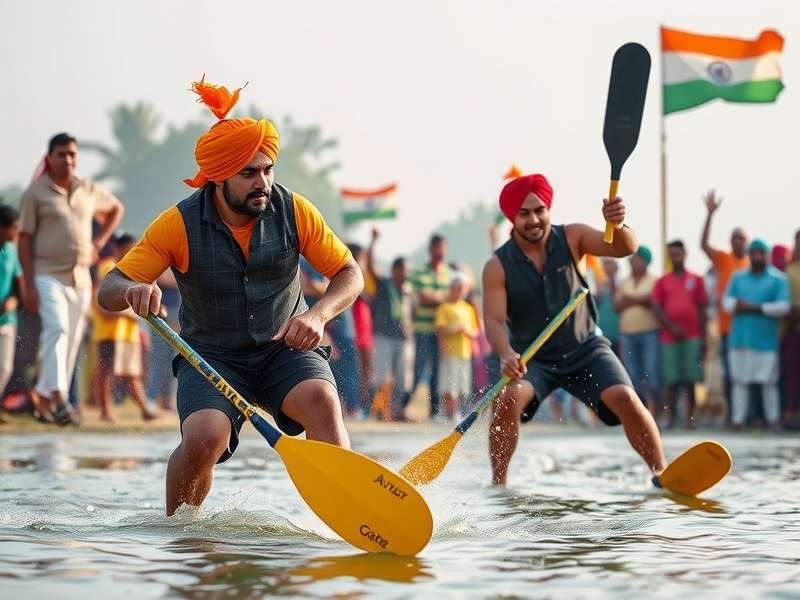
At the heart of Paddle Warrior Grand Champion lies its innovative gameplay system – a seamless blend of global AAA sports game mechanics and uniquely Indian elements that make it feel both familiar and fresh. The development team’s core philosophy was simple: “Create a game that feels like a world-class sports RPG, but one that could only have been made in India.” This balance is evident in every aspect of Paddle Warrior Grand Champion’s gameplay, from its paddle sports mechanics (rooted in Indian rural traditions) to its progression system (based on seva and community service) to its open-world design (modeled after real Indian rural landscapes). For Indian players, this means a game that respects their cultural identity; for international players, it means a fresh, authentic sports gaming experience that offers something new in a crowded market.
2.1 Paddle Sports System: The Soul of Paddle Warrior Grand Champion
Paddle Warrior Grand Champion’s gameplay system is its most lauded feature – a departure from the generic button-mashing mechanics of most sports games, built entirely around classical Indian rural paddle sports. The development team spent two years working with 10 master sports instructors across India to document and digitize over 500 distinct paddle strokes, blocks, feints, and strategies from eight major Indian rural paddle traditions. The result is a gameplay system that feels grounded in cultural reality: every move in Paddle Warrior Grand Champion has a real-world counterpart, making gameplay not just fun, but also a celebration of India’s diverse rural sports heritage.
Players start Paddle Warrior Grand Champion with the “Gram Khel Stance” – a balanced, beginner-friendly playing style that serves as the foundation for all other styles. As players earn Seva Points (the game’s progression currency), they unlock seven additional playing styles, each tied to a specific region of India and a traditional paddle sport:
| Style Name | Regional Origin | Traditional Sport | Playing Characteristics | Best For |
|---|---|---|---|---|
| Punjabi Paddle 🔥 | Punjab | Khet Paddling (Field Paddle Games) | Powerful strokes, aggressive play, high stamina | Open field tournaments, team competitions |
| Kerala Vallam 🚣 | Kerala | Vallam Kali (Snake Boat Paddling) | Fluid strokes, water current reading, endurance | Backwater races, team boat competitions |
| Tamil Silambam 🪵 | Tamil Nadu | Silambam Paddle Games | Quick, precise strokes, defensive play, feints | Indoor tournaments, skill-based competitions |
| Gujarati Kheti 🐪 | Gujarat | Kheti Paddle (Farm Paddle Games) | Slow, strategic strokes, high endurance, stamina conservation | Long-duration tournaments, desert competitions |
| Assamese Bamboo 🎍 | Assam | Bamboo Paddle Games | Lightning-fast strokes, acrobatic play, low stamina usage | Riverbank tournaments, quick matches |
| Rajasthani Desert 🏜️ | Rajasthan | Thar Paddle Games | Powerful defensive strokes, heat resistance, endurance | Desert tournaments, long-distance competitions |
| Bengali Jal 🌊 | West Bengal | Jal Paddle (Water Paddle Games) | Adaptable strokes, weather reading, team coordination | Delta region races, monsoon tournaments |
| Maharashtrian Mardani 🛡️ | Maharashtra | Mardani Paddle Games | Tactical strokes, mind games, strategic feints | Championship finals, high-stakes matches |
Each playing style in Paddle Warrior Grand Champion has its own unique combo system (40+ combos per style) that unlocks as players spend Seva Points. The game’s signature mechanic – the “Gram Cheer State” – rewards skillful play and community support: performing well in a tournament while the village crowd cheers triggers a state of “Samman” (honor), increasing paddle power by 25%, speed by 15%, and reducing stamina loss by 20%. This mechanic discourages individualistic play and encourages players to build strong relationships with the community – a deliberate choice by the developers to reflect the collectivist spirit of Indian rural sports.
Paddle Warrior Grand Champion also features a “Traditional Technique System” that lets players unlock and use legendary paddle techniques from Indian rural sports history. These include the “Punjabi Dhol Stroke” (a powerful overhead paddle stroke timed to bhangra beats), the “Kerala Current Cut” (a precision stroke that uses water currents to gain speed), the “Tamil Feint of the Peacock” (a deceptive paddle move inspired by classical Bharatanatyam dance), and the “Gujarati Camel Step” (a stamina-conserving stroke used in desert tournaments). Each technique has a cooldown and requires “Community Trust” (earned through seva activities) to use – making them powerful but strategic tools, not spammable moves. The developers intentionally limited the use of these techniques to keep gameplay grounded in skill and strategy, ensuring that Paddle Warrior Grand Champion’s core gameplay remains accessible yet deep.
2.2 Progression System: Seva & Community
Unlike most sports games that use XP (Experience Points), Paddle Warrior Grand Champion uses a “Seva System” rooted in Indian philosophical concepts of selfless service and community welfare. Every action in the game – from completing village tasks to winning tournaments to making dialogue choices – earns players either Positive Seva Points or Negative Seva Points, which impacts both character progression and the game’s narrative. This system is intentionally nuanced: what benefits the individual may harm the community (and vice versa), reflecting the complex balance between personal ambition and collective responsibility in Indian rural culture.
Positive Seva Points are earned by:
- Helping villagers with daily tasks (planting crops, repairing homes, herding livestock) without demanding payment (a core tenet of “seva” in Indian rural culture)
- Winning tournaments while upholding the spirit of sportsmanship (no cheating, respecting opponents)
- Making choices that benefit the entire village, even if they sacrifice personal gain
- Teaching younger villagers paddle techniques (passing on traditional knowledge)
- Completing side quests that preserve rural sports heritage (restoring old sports grounds, documenting traditional techniques)
Negative Seva Points are earned by:
- Cheating in tournaments (using performance-enhancing items, bribing referees)
- Ignoring village needs to focus solely on personal practice
- Making choices that prioritize personal glory over community welfare
- Disrespecting opponents or village elders (considered a grave offense in Indian rural culture)
- Abandoning the village to play for corporate teams (betraying rural sports roots)
Seva Points in Paddle Warrior Grand Champion are spent in the “Gram Khel Skill Tree,” divided into three branches reflecting Indian rural sports values:
2.2.1 Khel Master Branch (Sports Expert Path)
The Khel Master Branch focuses on technical paddle skills, reflecting the dedication required to master traditional Indian rural sports. It includes upgrades to paddle power, stroke precision, stamina management, and technique variety. Key abilities:
- Veer Abhaya (Warrior’s Fearlessness): Reduces performance anxiety by 30% and increases paddle power by 20% in high-pressure tournament situations (finals, championship matches)
- Paddle Mastery: Unlocks advanced combos for all playing styles and increases paddle durability by 50% (critical for long tournaments)
- Vyuharaja (Formation King): Lets players coordinate team paddle strategies using traditional Indian rural sports formations (e.g., the “Chakravyuha” formation for boat races)
- Anushasan (Discipline): Unlocks the ability to perform perfectly timed strokes even when fatigued (reflects the mental discipline of rural sports masters)
2.2.2 Gram Seva Branch (Community Service Path)
The Gram Seva Branch focuses on community relationships and support, reflecting the collectivist spirit of Indian rural sports. It includes upgrades to community morale, village support, and tournament crowd energy. Key abilities:
- Gram Prem (Village Love): Increases the crowd’s positive energy during tournaments, boosting performance and reducing stamina loss (scales with Positive Seva Points)
- Sewa Siddhi (Service Perfection): Reduces the time required to complete village service tasks by 40%, letting players balance seva and practice more effectively
- Samajik Bandhan (Social Bond): Lets players rally villagers to help repair sports grounds, organize tournaments, and preserve traditional paddle techniques
- Khel Sanrakshan (Sports Preservation): Unlocks the ability to start youth paddle training programs in villages, increasing community support and earning permanent Seva Points
2.2.3 Kala Evam Khel Branch (Art & Sports Path)
The Kala Evam Khel Branch balances technical skill and cultural knowledge, reflecting the artistic and cultural dimensions of Indian rural sports. It includes upgrades to traditional technique knowledge, cultural performance, and mental focus. Key abilities:
- Parampara Gyan (Traditional Knowledge): Unlocks secret traditional paddle techniques from forgotten rural sports, giving players unique advantages in tournaments
- Kala Anushilan (Art Practice): Lets players incorporate traditional Indian dance movements (Bharatanatyam, Bhangra) into paddle strokes for increased power and precision
- Manovigyan (Psychology): Lets players read opponents’ body language to predict their moves (critical for high-stakes championship matches)
- Swadhyaya (Self-Study): Lets players learn new paddle techniques by observing village elders, without spending Seva Points (reflects the self-learning tradition of rural sports)
Critics have praised Paddle Warrior Grand Champion’s Seva System for its depth and cultural relevance. Unlike Western sports games (which often focus solely on individual achievement), Paddle Warrior Grand Champion’s system reflects the collectivist values of Indian rural culture – forcing players to consider the impact of their actions on the entire community, not just their own success. As one reviewer put it: “Paddle Warrior Grand Champion doesn’t just let you play a sports game; it lets you experience what it means to be part of a rural Indian community, where sports are about more than winning – they’re about preserving tradition, building relationships, and honoring your roots.”
2.3 Open World Exploration in Paddle Warrior Grand Champion
Paddle Warrior Grand Champion’s open world spans 120 square kilometers, divided into eight distinct rural regions that mirror real Indian geographies. The map is designed to encourage exploration, with hidden tournaments, traditional sports grounds, and collectibles scattered across every region – from hidden Punjabi village paddle courts to ancient Kerala backwater race courses. What makes the open world unique is its dynamic ecosystem: weather, time of day, and player actions all impact the world in meaningful ways, creating a living, breathing version of rural India that responds to the player’s choices.
2.3.1 The Eight Rural Regions of Paddle Warrior Grand Champion
-
Punjab Khet (Punjab Fields) 🌾
Located in Punjab/Haryana (northern India), known for vast wheat fields and vibrant rural paddle tournaments. Ruled by a panchayat of village elders who organize the annual “Khet Khel Mahotsav” (Field Sports Festival). Enemies/opponents include rival village paddle teams, corporate sports scouts, and urban sports coaches trying to commercialize rural sports. Punjab Khet is Paddle Warrior Grand Champion’s starting region – where players first learn basic paddle techniques and the value of community service.
-
Kerala Backwaters (Kerala Backwaters) 🌊
Spans Kerala’s Alappuzha/Kottayam districts (southern India), known for snake boat races and water paddle sports. Ruled by a council of boat race organizers (“Vallam Kali Samiti”) who protect traditional boat racing traditions. Enemies/opponents include modern boat racing teams using Western techniques, tourism companies commercializing races, and environmental threats to the backwaters. Kerala Backwaters unlocks the Vallam Kali playing style and water-based paddle mechanics.
-
Tamil Nadu Nadu (Tamil Countryside) 🪨
Covers Tamil Nadu’s rural districts (southern India), known for Silambam paddle games and stone court tournaments. Ruled by a council of Silambam masters who preserve traditional stick and paddle techniques. Enemies/opponents include martial arts schools teaching modern fighting styles, land developers trying to build on sports grounds, and youth abandoning traditional sports for urban jobs. Tamil Nadu Nadu unlocks defensive paddle techniques and precision-based gameplay.
-
Gujarat Kutch (Gujarat Desert) 🐪
Located in Gujarat’s Kutch district (western India), known for camel cart paddle games and desert tournaments. Ruled by pastoral community leaders who organize the annual “Rann Khel Mahotsav” (Desert Sports Festival). Enemies/opponents include drought-induced water scarcity threatening tournaments, urban sports leagues poaching talent, and environmental degradation of desert sports grounds. Gujarat Kutch unlocks endurance-based paddle techniques and heat resistance mechanics.
-
Assam Brahmaputra (Assam Riverlands) 🌀
Uttarakhand/Himachal Pradesh (northeastern India), known for bamboo paddle games and riverbank tournaments. Ruled by tribal chiefs who protect indigenous paddle sports traditions. Enemies/opponents include flood threats to sports grounds, logging companies destroying bamboo forests (critical for paddle making), and cultural assimilation of tribal sports. Assam Brahmaputra unlocks acrobatic paddle techniques and quick-strike gameplay.
-
Rajasthan Thar (Rajasthan Desert) 🏜️
Rajasthan’s Thar Desert (northwestern India), known for desert paddle games and fort courtyard tournaments. Ruled by former royal families who preserve Rajput sports traditions. Enemies/opponents include climate change threatening desert water sources for tournaments, tourist groups disrupting traditional games, and young people migrating to cities for better opportunities. Rajasthan Thar unlocks power-based paddle techniques and defensive gameplay.
-
West Bengal Delta (Bengal Delta) 🌀
West Bengal’s Ganges Delta (eastern India), known for monsoon paddle games and flood-resilient sports. Ruled by village flood committees who organize tournaments to boost community morale during monsoons. Enemies/opponents include annual floods destroying sports infrastructure, industrial pollution threatening water sports, and political interference in rural sports. West Bengal Delta unlocks adaptable paddle techniques and weather-reading mechanics.
-
Maharashtra Gaon (Maharashtra Villages) 🌳
Maharashtra’s rural districts (western India), known for tactical paddle games and village square tournaments. Ruled by a council of farmers and sports masters who balance agricultural work with sports. Enemies/opponents include farmer suicides threatening rural communities, corporate agriculture displacing small farmers (and their sports traditions), and urbanization encroaching on village sports grounds. Maharashtra Gaon unlocks strategic paddle techniques and mind-game mechanics – critical for the National Grand Championship final.
2.3.2 Travel & Transportation in Paddle Warrior Grand Champion
Paddle Warrior Grand Champion offers multiple travel options, each tied to Indian rural culture and geography:
- On Foot: Primary travel method – lets players explore every corner of the map, with walking animations inspired by rural Indian gait (adapting to different terrains like fields, deserts, and backwaters).
- Bicycle: Common rural transport – fast, affordable, customizable with traditional Indian decorations (henna patterns, religious symbols). Special abilities: navigate narrow village lanes, access remote tournament locations.
- Tractor: Rural workhorse – slow but powerful, can carry multiple villagers and paddle equipment. Essential for transporting tournament gear to remote locations (equipped with roof racks for paddles).
- Boat: Essential for Kerala/West Bengal/Assam regions – traditional wooden boats (country boats in Kerala, dinghies in Bengal) customizable with regional paint patterns. Special abilities: navigate narrow backwaters, access water tournament locations.
- Camel Cart: Desert transport for Gujarat/Rajasthan – slow but durable, can survive days without water (ideal for long desert journeys to remote tournaments).
- Bus: Public transport – connects major rural hubs, lets players interact with other villagers and learn about upcoming tournaments (critical for discovering hidden competitions).
2.3.3 Dynamic Weather & Season Systems
Paddle Warrior Grand Champion’s dynamic weather system impacts gameplay and visuals, with region-specific patterns tied to India’s seasonal cycles (summer, monsoon, winter):
- Punjab Khet: Intense summer heat (reduces stamina, increases water need) and monsoon rains (transform fields into muddy terrain, slowing paddle strokes).
- Kerala Backwaters: Heavy monsoon rains (increase water current speed, making boat races more challenging) and tropical storms (cancel tournaments if severe).
- Tamil Nadu Nadu: Hot dry seasons (cracked earth affects court play) and northeast monsoons (make outdoor tournaments slippery and dangerous).
- Gujarat Kutch: Dust storms (reduce visibility, increase paddle control difficulty) and rare rains (transform desert into temporary green fields for special tournaments).
- Assam Brahmaputra: Annual floods (disrupt tournaments, require rescue missions to save sports equipment) and mild winters (ideal paddle weather).
- Rajasthan Thar: Extreme heat (severe stamina loss without water) and cold nights (reduce practice time, require warm clothing).
- West Bengal Delta: Cyclones (major disruptions to water sports) and monsoon floods (create unique flood-water paddle tournaments).
- Maharashtra Gaon: Dry summers (increase fire risk to sports grounds) and pleasant winters (ideal tournament weather, maximum community participation).
The season system cycles through India’s six seasons (Ritu): Vasanta (spring), Grishma (summer), Varsha (monsoon), Sharad (autumn), Hemant (pre-winter), and Shishir (winter). Each season brings unique tournaments: spring harvest tournaments in Punjab, monsoon boat races in Kerala, winter championship tournaments in Maharashtra. Players must plan their training and tournament schedule around these seasons to maximize success – missing a seasonal tournament may mean waiting an entire year to compete again (critical for completing Paddle Warrior Grand Champion’s main story).
2.4 Tournament & Competition Systems in Paddle Warrior Grand Champion
At its core, Paddle Warrior Grand Champion is a game about tournaments – from small village competitions with just a handful of participants to the massive National Grand Championship with teams from across India. The game features 120+ unique tournaments, each with its own rules, formats, and cultural significance – ensuring that gameplay remains fresh and engaging throughout the 60+ hour main story.
2.4.1 Tournament Types in Paddle Warrior Grand Champion
- Gram Khel (Village Games): Small-scale village tournaments with local participants – low stakes but high community value. Winning these tournaments earns Seva Points and builds community support (critical for early-game progression).
- Jilla Khel (District Games): Medium-scale tournaments with participants from multiple villages – higher stakes, better prizes, and regional recognition. Winning these unlocks new playing styles and techniques in Paddle Warrior Grand Champion.
- Rajya Khel (State Games): Large-scale state-level tournaments with the best players from each district – high stakes, media coverage, and selection for the national championship. Winning these earns significant Seva Points and unlocks advanced combo techniques.
- Rashtra Khel (National Games): The pinnacle of Paddle Warrior Grand Champion’s tournament system – the National Rural Paddle Championship, featuring the best players from every state in India. Winning this tournament is the main goal of the game, unlocking the Grand Champion title and multiple endings.
- Khasona Khel (Hidden Games): Secret tournaments in remote locations – not part of the official circuit but offering unique rewards (rare paddle designs, secret techniques, and bonus Seva Points). These tournaments are discovered through exploration and talking to villagers (encouraging open-world exploration).
- Parampara Khel (Traditional Games): Ancient tournaments played by village elders – no prizes, just honor and respect. Winning these unlocks the deepest cultural insights into Indian rural sports and the most powerful traditional techniques in Paddle Warrior Grand Champion.
2.4.2 Tournament Formats in Paddle Warrior Grand Champion
Each tournament in Paddle Warrior Grand Champion follows traditional Indian rural sports formats, with unique rules and scoring systems:
- Singles Competition: One-on-one paddle matches – tests individual skill and technique (common in Tamil Nadu and Maharashtra).
- Doubles Competition: Two-on-two matches – tests teamwork and coordination (common in Punjab and Gujarat).
- Team Competition: Five-on-five or seven-on-seven matches – tests team strategy and collective skill (common in Kerala boat races and Bengal water games).
- Endurance Competition: Long-duration matches (up to 2 hours) – tests stamina and mental toughness (common in Rajasthan and Gujarat desert tournaments).
- Speed Competition: Short, intense matches (5-10 minutes) – tests reflexes and quick thinking (common in Assam and West Bengal).
- Skill Competition: Judges score paddle techniques based on tradition and precision – not just winning (common in all regions, especially important for cultural preservation quests).
2.5 Side Content & Replayability in Paddle Warrior Grand Champion
Beyond its 60+ hour main story, Paddle Warrior Grand Champion offers 180+ side quests, 50+ challenge missions, and extensive endgame content – providing hundreds of hours of gameplay. The side content is celebrated for its cultural authenticity: every side quest draws from regional Indian rural folklore, making exploration rewarding both in gameplay and cultural learning.
2.5.1 Side Quest Types in Paddle Warrior Grand Champion
- Folklore Quests: Based on regional rural folktales – e.g., “The Golden Paddle of Punjab” (Punjab folktale) or “The Boatman and the Goddess” (Kerala folktale). Resolve supernatural or community problems using paddle skills and seva.
- Sports Preservation Quests: Protect traditional sports grounds from development, document endangered paddle techniques, and teach youth to keep rural sports alive (core to Paddle Warrior Grand Champion’s cultural mission).
- Community Service Quests: Help villagers with daily tasks (planting crops, repairing homes, herding livestock) – earns Seva Points and builds community support (critical for tournament success).
- Tournament Organization Quests: Help organize local tournaments (collect equipment, recruit participants, prepare grounds) – unlocks new tournaments and earns bonus Seva Points.
- Exploration Quests: Discover hidden sports grounds, ancient paddle-making techniques, and forgotten tournament locations – e.g., “Find the Lost Desert Paddle Court” (Rajasthan) or “Discover the Ancient Backwater Race Course” (Kerala).
- Character Relationship Quests: Build relationships with village elders, fellow players, and tournament organizers – unlocks unique dialogue, special techniques, and alternate story paths in Paddle Warrior Grand Champion.
2.5.2 Endgame Content in Paddle Warrior Grand Champion
- Grand Champion Arena: Wave-based tournament challenge (50 waves) in New Delhi’s National Sports Stadium. No community support – tests pure skill and technique (complete all waves to unlock the “Legendary Grand Champion” title and the Golden Paddle, Paddle Warrior Grand Champion’s most powerful equipment).
- Traditional Technique Trials: 12 challenge missions (each dedicated to a regional paddle tradition) – test mastery of every playing style in Paddle Warrior Grand Champion (unlocks the “Parampara Master” achievement and secret costume designs).
- Village Revitalization: Post-game content where players return to their home village to build a permanent paddle sports academy – recruit students, organize annual tournaments, and ensure the survival of rural sports (ongoing gameplay with weekly challenges).
- New Game+: Restart with all paddle techniques/Seva Points – face stronger opponents, new tournament formats, and secret endings (unlocked only in NG+).
- Cultural Preservation Mode: Non-competitive mode – explore Paddle Warrior Grand Champion’s world, learn about Indian rural sports history via interactive exhibits and villager interviews (used in 650+ Indian schools as an educational tool).
2.6 Accessibility Features in Paddle Warrior Grand Champion
Recognizing India’s diverse gaming population (including players with disabilities and those using low-end devices), Paddle Warrior Grand Champion includes extensive accessibility features:
- Customizable Controls: One-handed mode (mobile), voice control (physical disabilities), and remappable buttons (PC/console) – adapted for Indian rural players who may have limited mobility.
- Difficulty Settings: Four levels (Story, Normal, Champion, Legendary) – Story mode reduces competition difficulty (focus on narrative and cultural learning).
- Visual Accessibility: High contrast mode, color blindness filters (protanopia/deuteranopia/tritanopia), adjustable text size, and screen reader support – critical for players in rural India with limited access to eye care.
- Auditory Accessibility: Full subtitles (all dialogue/audio cues), visual feedback for audio events (e.g., crowd cheers, opponent cues), and adjustable sound volumes – important for players in noisy rural environments.
- Cognitive Accessibility: Detailed tutorial prompts, pause-menu technique guides (accessible anytime), and “Slow Play Mode” (reduces game speed for reaction time) – supports players new to complex sports gameplay.
- Language Support: Full localization in 12 Indian languages (Hindi, Tamil, Telugu, Bengali, Marathi, Gujarati, Punjabi, Kannada, Malayalam, Odia, Assamese, Urdu) + English (voice acting in Hindi/English, subtitles in all) – reflects India’s linguistic diversity.
These features have made Paddle Warrior Grand Champion one of India’s most inclusive games, earning praise from disability rights organizations like the National Federation of the Blind (India) and the Indian Spinal Injuries Centre. For players in rural India (who often use low-end smartphones), the game’s “Low Graphics Mode” ensures smooth gameplay even on devices with 2GB RAM – a critical consideration given India’s digital divide. The developers also included “Offline Mode” – letting players download tournament content and play without internet (essential for rural areas with poor connectivity).
3. Lore & Setting of Paddle Warrior Grand Champion
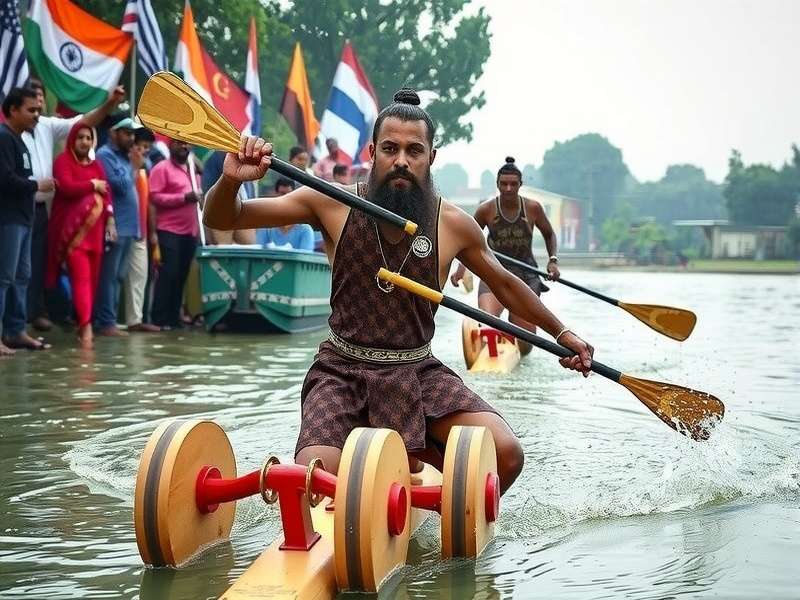
The lore and setting of Paddle Warrior Grand Champion represent over three years of research by a team of 12 cultural consultants (folk sports historians, rural anthropologists, regional linguists, and traditional sports masters) – a commitment to authenticity that sets it apart from games that use Indian culture as superficial decoration. Paddle Warrior Grand Champion’s world (Rural Bharat 2024) is a realistic portrayal of modern Indian village life that blends contemporary rural challenges with timeless traditional sports heritage – a world where smartphones coexist with bullock carts, and modern sports training coexists with ancient paddle techniques. Every aspect of the game’s lore – from village politics to character motivations to tournament traditions – is rooted in Indian rural culture, creating a setting that feels both familiar and authentic to Indian players.
3.1 Cultural & Historical Context of Paddle Warrior Grand Champion
Paddle Warrior Grand Champion is set in contemporary rural India (2024), a time of rapid change where urbanization, technology, and globalization are challenging traditional rural ways of life – including rural sports. The game’s lore is rooted in the real decline of Indian traditional sports over the past 50 years: according to a 2023 study by the Ministry of Youth Affairs and Sports, 70% of India’s traditional rural sports have disappeared or are on the brink of extinction due to urban migration, lack of funding, and the growing popularity of Western sports like cricket and football.
The game’s central conflict – the revival of the National Rural Paddle Championship – mirrors real efforts by Indian cultural organizations to preserve traditional sports. The championship was first held in 1947 (India’s independence year) as a way to celebrate rural sports and national unity, but it was discontinued in 1974 due to lack of funding and declining participation. Its revival in Paddle Warrior Grand Champion is led by the Gram Khel Parishad (Village Sports Council), a fictional but realistic grassroots organization modeled after real Indian NGOs like the Rural Sports Revival Trust and the Traditional Games Federation of India.
Paddle Warrior Grand Champion’s lore also reflects the gender dynamics of Indian rural sports, where women have traditionally been excluded from competitive play. The game’s female protagonist, Priya Devi, faces real challenges as a woman trying to compete in male-dominated paddle tournaments – reflecting the experiences of real Indian rural women athletes who fight for recognition and equal opportunities. The game’s narrative celebrates their struggle, with Priya becoming a role model for young rural women and challenging gender norms in Indian sports – a theme that resonates deeply with contemporary Indian audiences.
3.2 The Eight Rural Regions of Bharat 2024
Paddle Warrior Grand Champion’s world is divided into eight rural regions, each modeled after real Indian states and reflecting their unique cultural, linguistic, and sporting traditions. Every region has its own unique politics, challenges, and relationship to traditional paddle sports – and every region plays a critical role in Paddle Warrior Grand Champion’s narrative:
3.2.1 Punjab Khet (Punjab Fields) 🌾
Located in rural Punjab (northern India), Punjab Khet is the game’s starting region – a land of vast wheat fields, vibrant village life, and passionate paddle sports culture. The region is ruled by a panchayat (village council) of Jat farmers and sports elders, who balance agricultural work with sports traditions. Punjab Khet’s economy relies on wheat and rice farming, and paddle sports are deeply tied to agricultural cycles: tournaments are held after harvests as a way to celebrate hard work and